

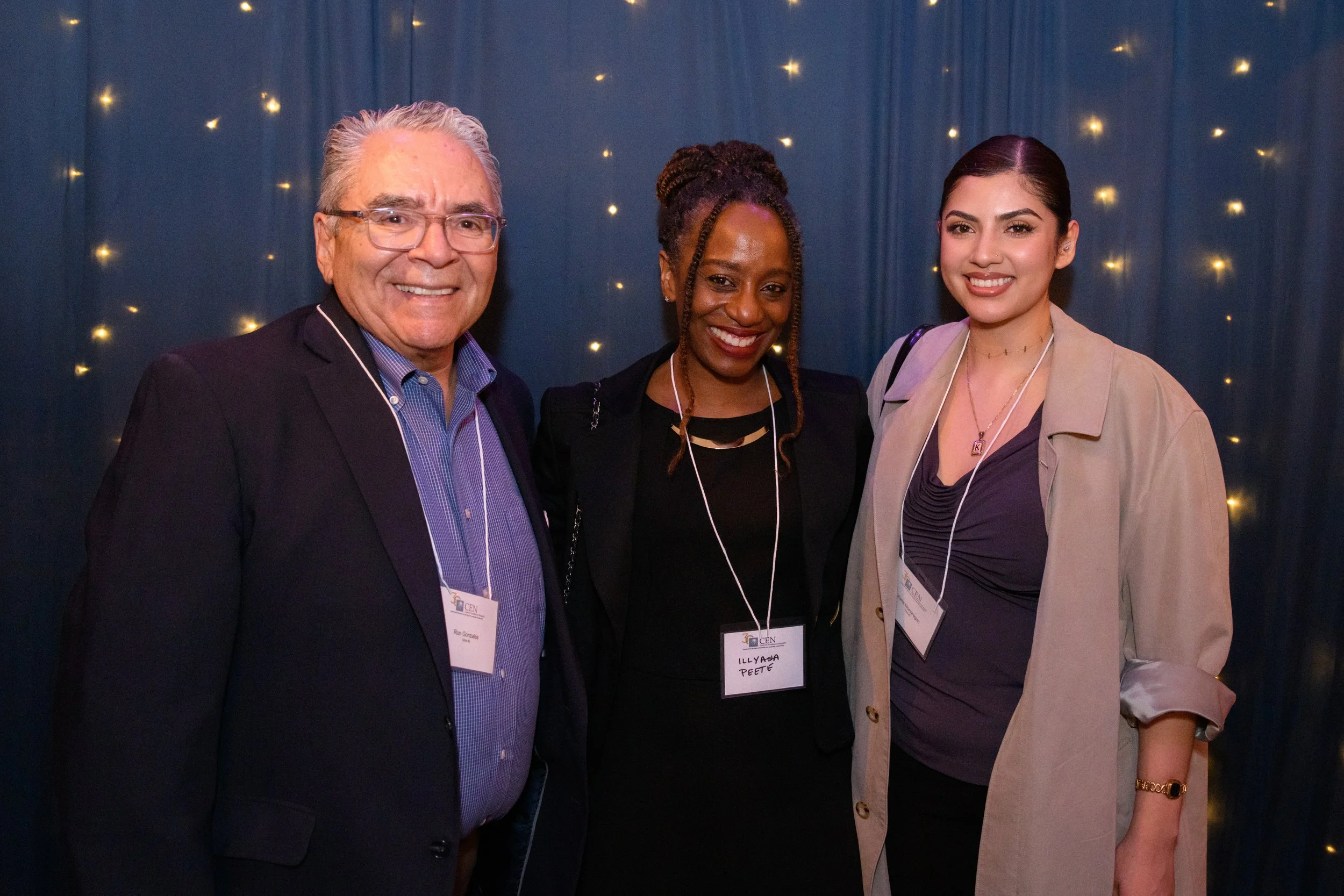
My Focus is My Locus - Equity in philanthropy: what it means to build giving that centers the communities who have historically been left out of the room.
Introduction
Philanthropy has the power to create extraordinary change, but that power becomes even greater when more people have a voice in shaping where resources go, how decisions are made, and what impact looks like.
For me, equitable philanthropy begins with relationships. It requires us to listen differently, challenge assumptions, recognize generosity in all its forms, and be brave enough to trust people to understand what their communities need. It also asks us to examine who has traditionally been invited into philanthropic spaces, whose contributions have or have not been recognized, and whose leadership has or has not shaped decisions.
As we recognize Black Philanthropy Month, I believe we have an opportunity to honor a rich history of generosity while considering how we build a more inclusive future for philanthropy.
What does Black Philanthropy Month mean to you, both in your work with AFP Silicon Valley and in your own giving?
Black Philanthropy Month reminds us that generosity has always been part of Black communities, long before it was widely recognized or called philanthropy. Too often, people assume Black philanthropy is something new. It is not.
For generations, Black families, neighbors, churches, and community institutions have pooled resources, cared for one another, funded education, supported businesses, responded during times of hardship, and created opportunities where few existed. The Black church, in particular, has long served as a center for giving, organizing, and collective investment.
For me, this month honors that legacy while challenging us to broaden how we recognize philanthropists. Giving does not begin with wealth. Time, talent, resources, advocacy, mentorship, relationships, and financial contributions all have the power to create change.
In my work with AFP Silicon Valley and in my own giving, I want more people to see themselves as philanthropists and recognize that generosity has many expressions.
Has there been a moment in your fundraising work where centering historically excluded donors or communities changed the outcome, or changed how you approached the ask?
One story has stayed with me because it demonstrates what trust can require from a funder.
A funder I know provided financial support to an organization working overseas. She told the organization's leaders that she wanted them to trust her, communicate openly, and be honest about what they needed.
Then something happened that no grant agreement could have anticipated. The organization's leader passed away.
The organization did not have sufficient resources to bury their leader. They went back to the funder and told her candidly that they could not move forward with the work while their leader remained unburied. They needed to use a portion of the funding for the burial and believed they could still accomplish approximately 75 to 85 percent of the originally planned work.
Her initial reaction was discomfort. The money had been given for a particular purpose, and now they wanted to use some of it differently.
Then she checked herself.
She had asked them to trust her. She had asked them to be honest. Now she had to decide whether she really meant it.
She trusted their leadership and their understanding of what was needed. They buried their leader, ultimately completed approximately 95 percent of the work, and built a relationship with the funder that continued well beyond that grant.
That story stays with me because trust based philanthropy becomes real when trust is tested. Sometimes equitable philanthropy requires funders to relinquish control and recognize that the people closest to the work may understand what is needed better than we do.
What is one leading practice you'd want other nonprofit leaders to adopt around equitable fundraising?
Lead with curiosity.
Learn why someone gives, what they care about, how they want to engage, and what experiences have shaped their view of philanthropy. Be willing to question the assumptions we sometimes make about who has the capacity or desire to give based on a person's title, background, ZIP code, or perceived wealth.
Every person brings something of value. When we approach fundraising with curiosity rather than assumptions, we discover possibilities we might otherwise miss.
What do you wish more nonprofit leaders understood about the difference between diversifying a donor base and actually sharing power with the communities they're asking to give?
Diversifying your donor base may change who is on your list. Sharing power changes who helps make decisions.
That distinction matters.
Representation alone does not guarantee influence. We can invite new people into an organization while continuing to operate within systems, traditions, and priorities they had no role in creating.
Sharing power requires us to examine who helps set priorities, whose expertise carries weight, who participates in decisions, and whether we are willing to change direction because of what we hear. Inviting someone into the room is one step. Valuing their influence once they arrive is another.
What would you tell an emerging leader who wants to build more inclusive donor relationships but isn't sure where to start?
Start by listening. Approach each relationship with curiosity, take the time to ask thoughtful questions, show up consistently, and learn someone's story before asking them to invest in yours.
Rather than beginning with, "How much can this person give?" consider asking, "Who is this person? What matters to them? What can I learn from them? What might we accomplish together?"
People want to know that their interests, experiences, and aspirations matter. When that foundation exists, an authentic philanthropic relationship has room to grow.
Closing
Equitable philanthropy asks us to think differently about generosity, leadership, and who has the power to influence change. It also challenges us to recognize that some of the practices we have inherited may no longer serve the future we are trying to create.
My hope is that we remain curious enough to learn, courageous enough to challenge our assumptions, and open enough to recognize philanthropy in all the ways it shows up.
There is room for all of us in philanthropy. Each of us has something meaningful to contribute, and when those contributions are valued, our collective impact becomes even greater.
That is how we build stronger communities together.
—
Illyasha Peete, MBA
President, AFP Silicon Valley
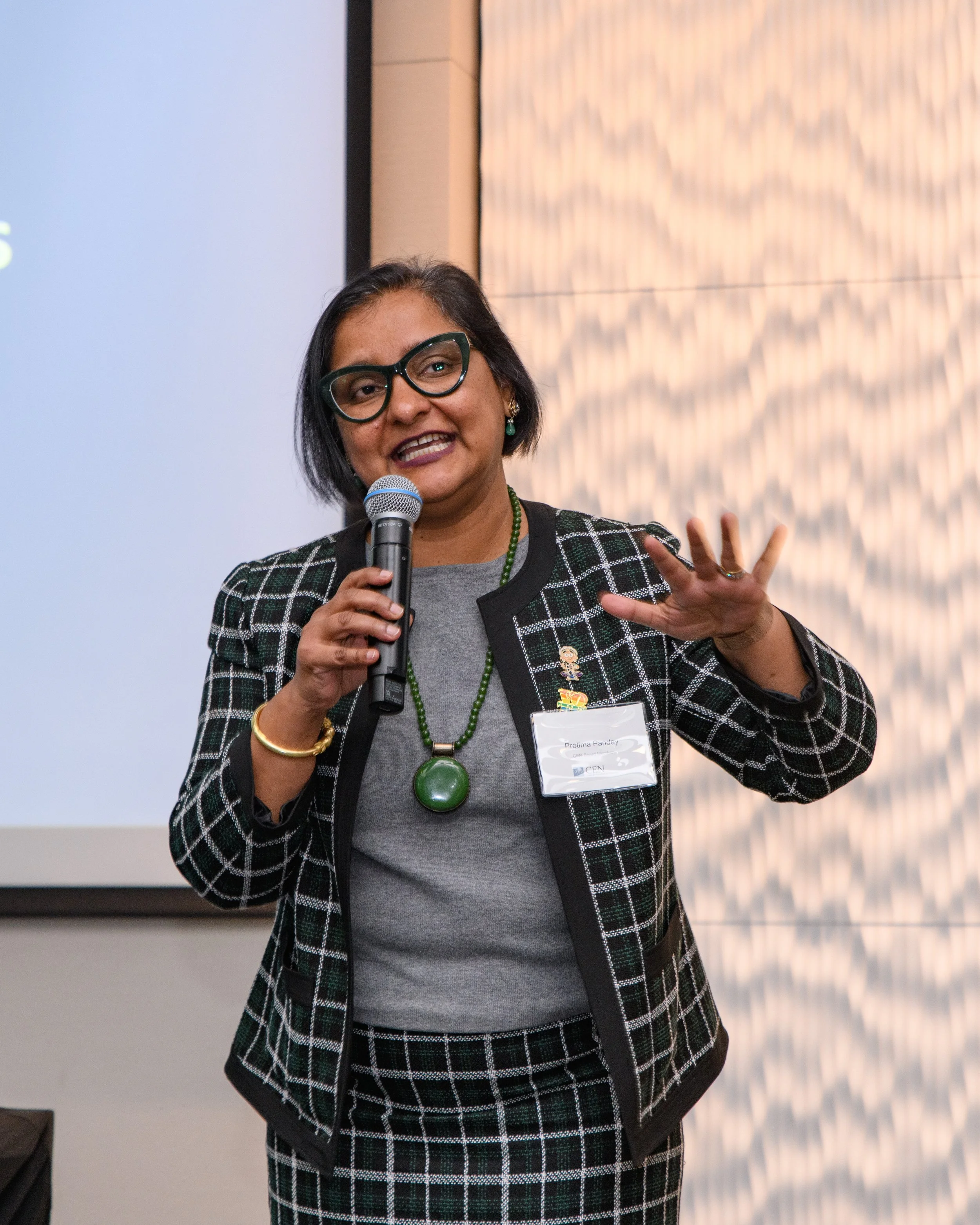
My Focus is My Locus - Organizational sustainability: what it takes to build an organization that lasts.
What does organizational sustainability actually mean to you, beyond keeping the lights on?
The focus has to be on an overall approach balancing long term goals based on the mission and vision with short term immediate needs including serving the clients, taking care of staff, and maintaining financial stability. Organizations must have the ability to pause periodically to examine the roses and thorns, a health check-up if you will, on what’s going well and what needs to change. In that process, success has to be defined beyond getting it done today, instead look at processes that are going well, challenges that have been tackled, not just covered with a band-aid, and efficiencies that have helped both the client and teams. Helping organizations realize their success metrics go beyond short term wins is important for both the staff, who see their work contributing to organizational longevity, and clients, who trust providers that have demonstrated sustainability.
Has there been a moment in your leadership where you had to make a hard decision to protect the long-term health of your organization, even when it was uncomfortable in the short term?
Recently the organization had to evaluate a decision made to eliminate its membership requirements with ongoing business needs. Using the IDEAL guiding principles allowed the organization to continue forward despite the challenges that we have to address. When called upon to make a decision that is difficult or uncomfortable, leaders must use organizational mission, vision, guiding principles which will ground their analysis and provide a path forward, rooted in purpose, not person. Eventually, and essentially, every leader is called upon to take an organization forward with their leadership style in service of the organization they are part of. So their discomfort or concern with a difficult decision, while natural, needs to be channeled through the lens of what guides and fuels the organization- that’s the sweet spot to stay in when leading through a difficult time.
What is the relationship between investing in your own leadership development and the sustainability of the organization you lead?
Leaders are best served if they look beyond the organization for guidance on improving or shoring up skills and talents when they identify gaps in the way they lead. The external support of an oxygen mask allows one to sustainably help someone else and that’s the bright guiding line when faced with balancing your own leadership development needs with continuing to lead. The relationship to leadership development and sustainability of the organization you are leading is that evaluating for longevity of the organization isn’t a one-time occurrence that is packaged away for all time to come, just like developing your own wheelhouse of knowledge as a leader isn’t a one time event. And when one is able to have the time, opportunity and privilege to invest in one’s own growth as a leader, newer challenges and opportunities present themselves, contributing to continued success of the organization.
What do you wish more nonprofit leaders understood about building financial resilience before a crisis forces the conversation?
When a crisis forces conversations about financial stability, or even anything else impacting the organization, all that leaders end up doing is being reactive, grabbing the closest available option to keep the doors open. Because leading a nonprofit is akin to drinking from the firehose, there’s never any time to sit back and look at the landscape, operational, administrative, and financial, which are the three basic pillars of any organization, to determine gaps and weaknesses. Working in crisis mode often brings about solutions that may not last beyond the crisis. It is for this reason that nonprofit leaders must consider taking stock of what is needed, including financial stability decisions, at a time when they have the ability to be responsive rather than reactive, analyzing the gaps that need to be filled and planning forward, instead of discovering a sinkhole, which is dangerous and needs emergency responders, not financial planners.
What does a sustainable organization feel like from the inside, for the staff, for the board, for the communities you serve?
From the inside it’s a well oiled machinery that has well defined processes, employees invested in the mission and vision of the organization, and a Board that’s able to support the organization as their fiduciaries. It’s a place where not only is the budget balanced, attrition is at a standard pace, staff vacancies are manageable, and the Board is able to help fundraise and be the organizational ambassadors they can be, with the community trusting the organization as a place to be heard, served, and taken care of.
If you could go back and tell yourself one thing about playing the long game in this sector, what would it be?
That the reality is two steps forward, one step back, that each challenge is a learning opportunity which can be tucked away for use at another time, and that success looks different at different times. Having the tenacity to stay in this sector requires periodically taking stock of the WHY that brought you to this work, to find your community who can be your watercooler buddies when times are tough, and to remind yourself that ‘when you’re tired, take rest, don’t quit’ a quote often attributed to the artist Banksy.
- Protima Pandey, CEN’s Outgoing Board Chair
My Focus is My Locus: The tension between doing the mission and managing the people doing it.
For me, one of the most enduring leadership lessons is this: where we place our attention shapes what we are able to build.
Right now, endless distractions compete for our focus. We are under constant pressure to react immediately to political chaos, attacks on democratic participation, shrinking resources, culture wars, and fear-based narratives. But sustainable leadership, especially in challenging times, cannot be built in a perpetual state of reaction.
That is why my personal mantra this season has been: My focus is my locus.
At CEN, we are centering our attention on the work that endures and on the areas where we can have meaningful impact. We remain committed to strengthening organizations long after the news cycle changes and helping leaders navigate complexity without abandoning their values or themselves.
We also recognize that leadership and political power are deeply connected. When communities lose access to representation, voting protections, or equitable participation, nonprofits often become part of the civic infrastructure that helps hold democracy together at the local level.
That work matters deeply to me personally. I come from a family that helped shape the Civil Rights Movement in the American South, and I have never taken for granted that our rights are permanently secure. They must be protected, exercised, and strengthened across generations. I carry that commitment into my role at CEN, where we support organizations and leaders doing the hard work of protecting democracy, advancing civic participation, and upholding the dignity of every community.
CEN’s focus remains clear: leadership development, healthy governance, courageous conversations, collaboration, and strengthening organizations so they can continue to act with integrity under pressure, even in the most daunting moments.
Focused leadership is not light work. In times like these, it is transformational.
Beyond Survival: A Reflection on Women Leadership
In closing what felt like a particularly consequential Black History Month, I find myself reflecting on the weight—and the gift—of leadership in this moment. The political climate in the U.S. is not abstract. It shapes funding flows, public narratives, and the lived realities of the communities we serve. For many in our CEN community—especially Black leaders—Black History Month was not just commemorative, it was clarifying.
As we begin Women’s History Month, my thoughts move toward envisioning what exists beyond mere survival—something very relevant to the nonprofit sector.
For decades, women have kept institutions functioning—even when they did not fully serve or protect us. We are seeing painful, real-time reminders of how systems can enable abuse and reward silence. As powerful networks are exposed and held to account for perpetrating and protecting harm, in an effort to take away lessons from these situations, I consider what our nonprofit organizations are designed to sustain and uphold and how.
Stabilizing a team in turbulent time is infrastructure. Applying an IDEAL lens to governance is infrastructure. Insisting on dignity in budgeting, programming, and policy is infrastructure. But building sustainable infrastructure cannot come at the cost of depletion or our settling for survival rather than seeking our birthright to thrive.
I hope women—especially those early in their leadership journeys—hear clearly that great leadership is not proven by how much we endure. Each passing day teaches me that it is strengthened by what we protect. Our health. Our family and faith. Our joy and creativity. Our integrity. Our sanity! The life we are building alongside the work. The parts of us that existed before the title and will remain long after it.
During this Women’s History Month, may we move beyond surviving flawed systems and toward imagining and building new ones that support cultures of shared power, accountability,
justice, love, and care. May we build institutions strong enough to hold truth—and humane enough to protect the people inside them.
That is the future worth leading toward.